Learning Outcomes
i. Differentiate between epigeal and hypogeal germination.
ii. Explain the processes and mechanisms behind each germination type.
iii. Analyze the evolutionary advantages of epigeal and hypogeal germination.
iv. Identify environmental conditions that support these germination processes.
i. Epigeal Germination
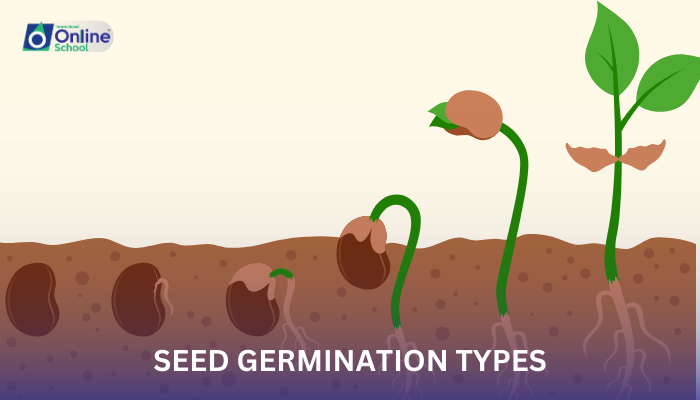
Definition and Process: In epigeal germination, the cotyledons (seed leaves) rise above the ground due to the elongation of the hypocotyl (the stem below the cotyledons). This type of germination is seen in plants like beans and sunflowers.
Mechanism: After the seed absorbs water, it swells, and the seed coat breaks open. The growing hypocotyl pushes the cotyledons upward into the air, where they typically become photosynthetic organs.
Evolutionary Advantages: This method can provide the seedling with additional photosynthetic capacity and may help it emerge from soil that's covered with leaf litter or other debris.
ii. Hypogeal Germination
Definition and Process: With hypogeal germination, the cotyledons stay below the ground. The epicotyl (the stem above the cotyledons) elongates and pushes the plumule (the growing shoot tip) above the soil surface. This type of germination occurs in plants like peas and corn.
Mechanism: The seed also swells after water uptake but the cotyledons stay buried and often function as food storage that the growing plant consumes.
Evolutionary Advantages: Hypogeal germination can be advantageous in areas with fluctuating soil temperatures or in regions with frequent soil disturbance, as the important food-storing cotyledons are protected underground.
iii. Environmental Conditions
Soil Temperature and Moisture: Both types of germination require suitable soil temperature and moisture levels. Epigeal germinators might prefer open, well-lit environments, while hypogeal germinators may be better suited to darker or more disturbed soils.
Seed Size and Energy Reserves: Larger seeds tend to have more energy reserves, which can influence the type of germination strategy a plant employs.
In conclusion, epigeal and hypogeal germination represent two strategies plants use to begin growth from a seed. Each has distinct mechanisms and evolutionary advantages that suit different environmental niches and conditions. Understanding these processes is critical for botanists, ecologists, and agriculturalists in plant cultivation and ecosystem management.
